There is something about this lake that does not translate well into marketing copy. Practitioners come here expecting a yoga retreat and leave describing something more difficult to name — a quality of attention, a slowing down that goes deeper than rest, a sense of having remembered something they had forgotten. It is a pattern consistent enough that it is worth trying to explaining.
The geography does something to you
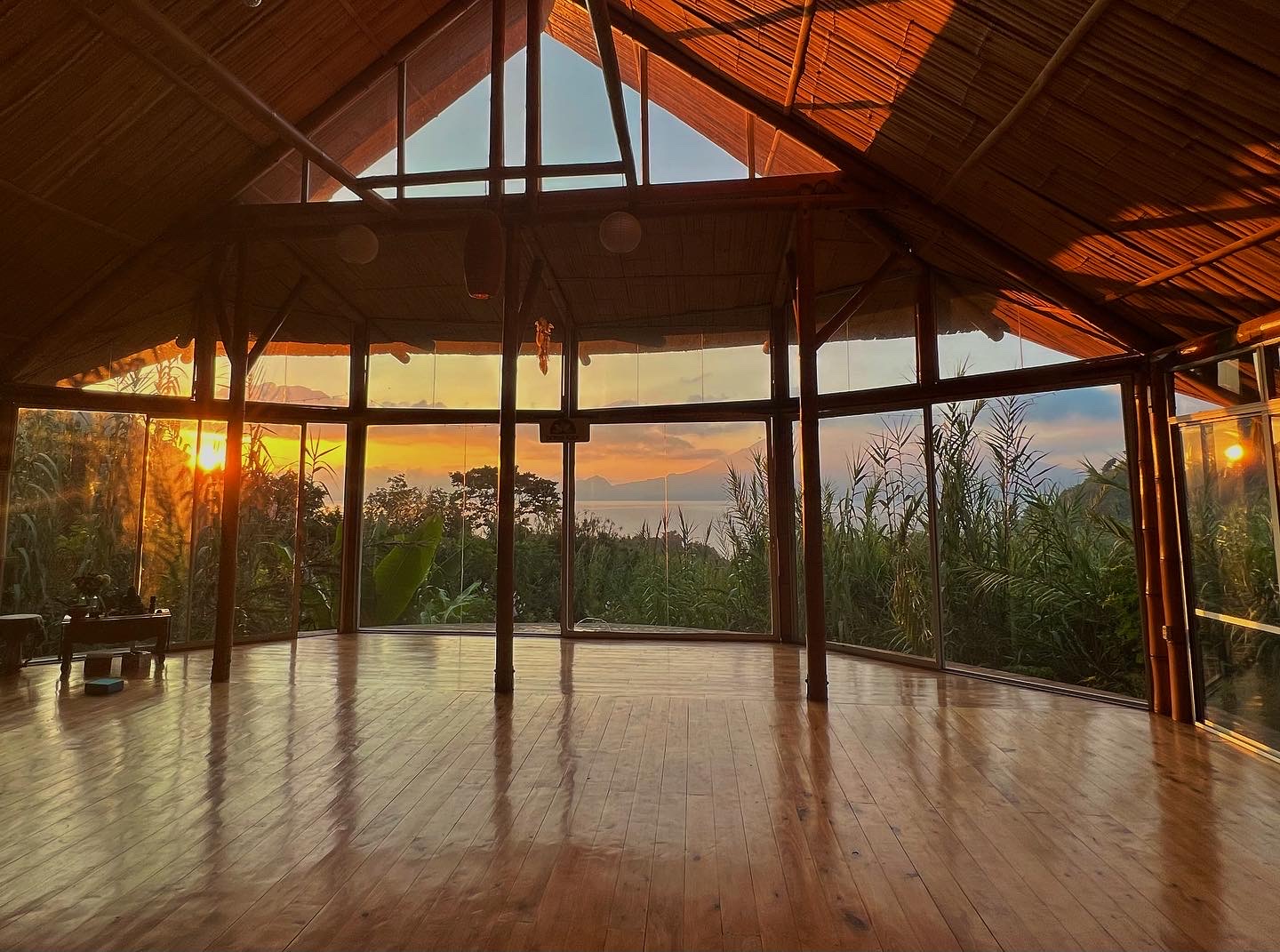
This is not incidental to the retreat experience. When you wake up and the first thing you see is a volcano across water, something in your nervous system recalibrates. The scale changes your sense of your own problems. The elevation means the air is genuinely different — clean, cool, and thin enough to notice. Even the quality of light shifts throughout the day in ways that make it difficult to look at your phone.
The villages keep you grounded in something real
This matters for retreat in a way that is easy to underestimate. Many wellness destinations create a bubble — a carefully controlled environment that is comfortable but disconnected from real life. The lake does not permit that. The culture around you is too alive, too present, too genuinely different from the world most retreatants come from. The cognitive interruption of being in indigenous Maya territory — where your assumptions about time, productivity, and what constitutes a good life are gently but persistently challenged — is itself a form of practice.
The combination of altitude, nature, and practice is particularly effective
Retreat centers everywhere understand this in principle. But most retreat destinations sit within driving distance of a city, which means the pull of ordinary life is never far away. Lake Atitlan — particularly the villages on the northwest shore, accessible only by boat or the mountain road — achieves genuine geographic separation. You are not just away. You are unreachable in a way that most of the world no longer permits.
- — The lake sits at 1,560m — altitude that sharpens attention and deepens sleep
- — Cold lake water for swimming provides genuine nervous system reset
- — No traffic, no urban noise — the ambient soundscape is water, birds, and wind
- — Boat-accessible villages create natural boundaries that support digital disconnection
- — The living Mayan culture provides daily cognitive interruption of ordinary assumptions
The community you find here is different
People who come to Lake Atitlan — particularly to the smaller villages like Tzununa, San Marcos, and Santa Cruz — are not the same demographic as resort tourists. They are practitioners, teachers, seekers, writers, and remote workers who have made a considered choice to spend time somewhere that requires effort to reach and offers no easy entertainment in return. The result is that the people you meet here tend to be unusually interesting, unusually honest, and unusually willing to have the kinds of conversations that most people are too busy or too defended to have in ordinary life.
Meals at a retreat center on the lake are not like meals at a hotel. They are genuinely communal — long, unhurried, and often the beginning of friendships that outlast the retreat itself. This is not a design feature. It is what happens when you put thoughtful people in a beautiful place and remove the usual distractions.
Why Tzununa specifically
Tzununa is different. It is a small, primarily Mayan village with no significant tourist infrastructure — a few small guesthouses, a handful of restaurants, and the kind of quiet that has become genuinely rare. Most visitors pass through on the lancha without stopping. The ones who stop tend to stay longer than they planned.
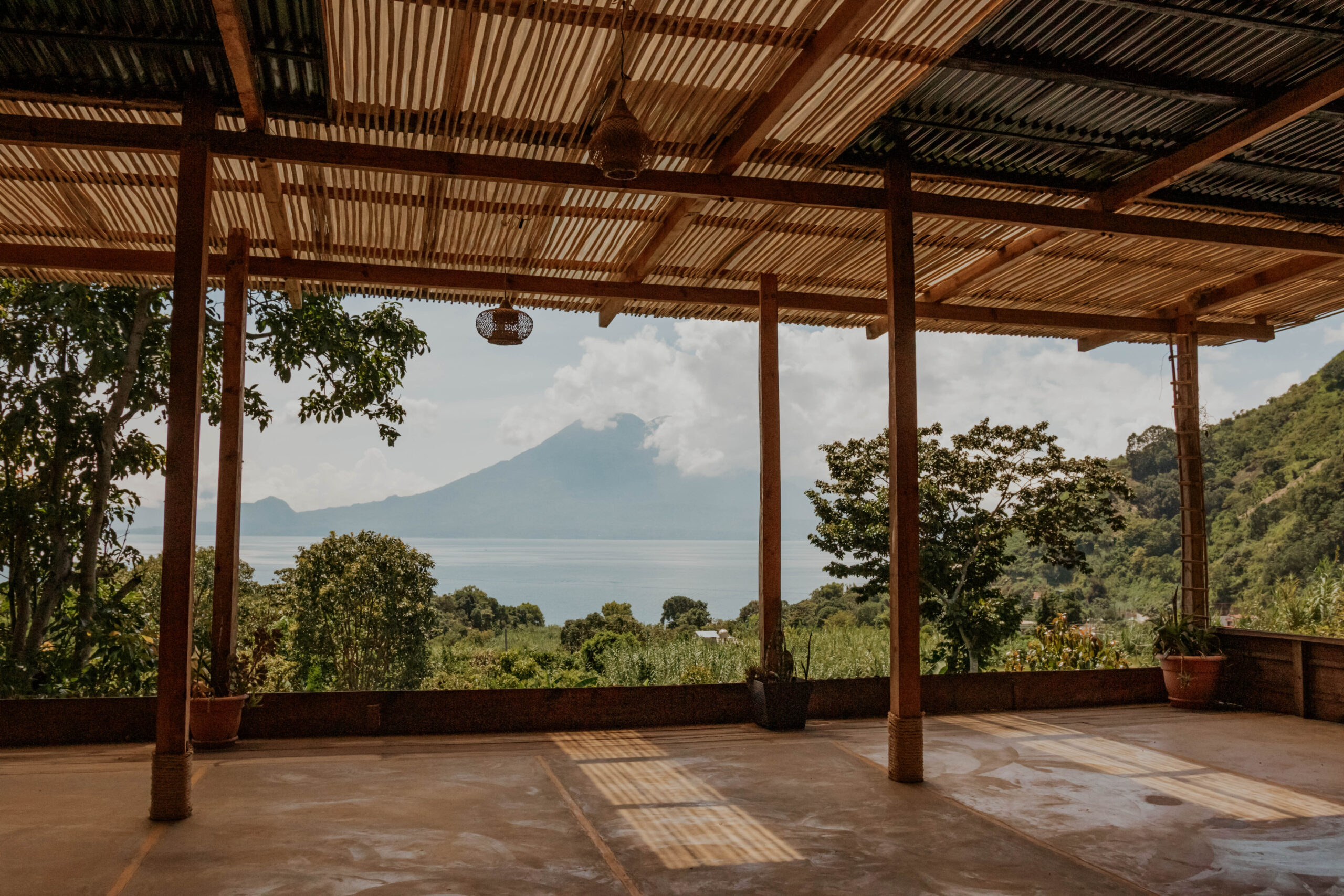
Atitlan Eco sits in Tzununa — built from local materials by local craftspeople, integrated into the village community, and designed for exactly the kind of retreat that the lake makes possible. The river runs through the property. The volcanoes are visible from the yoga shala. The lake is a ten-minute walk. There is very little to do that does not involve being present.
That, it turns out, is the point.